The Persian pâpouche

Born centuries ago of a cotton thread and a gesture passed from mother to daughter.

Discover

The Persian pâpouche

پاپوش

Born centuries ago of a cotton thread and a gesture passed from mother to daughter.

An elder's hands crocheting the upper of a pâpouche, in chiaroscuro
Arak · Iran

Fewer than twenty women still master this ancestral crochet.

A shoe the world has slowly forgotten.

Discover its story
The revival

A second life

MAJNOON takes up this endangered craft. The upper, crocheted by hand, remains unchanged — the ancestral Giveh. A contemporary sole, in hevea milk, gives it the bearing of today.

LACTAE HEVEA® · Made in France
The project
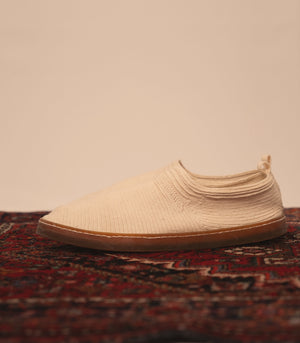
The Pâpouche in profile: crocheted upper and hevea milk sole
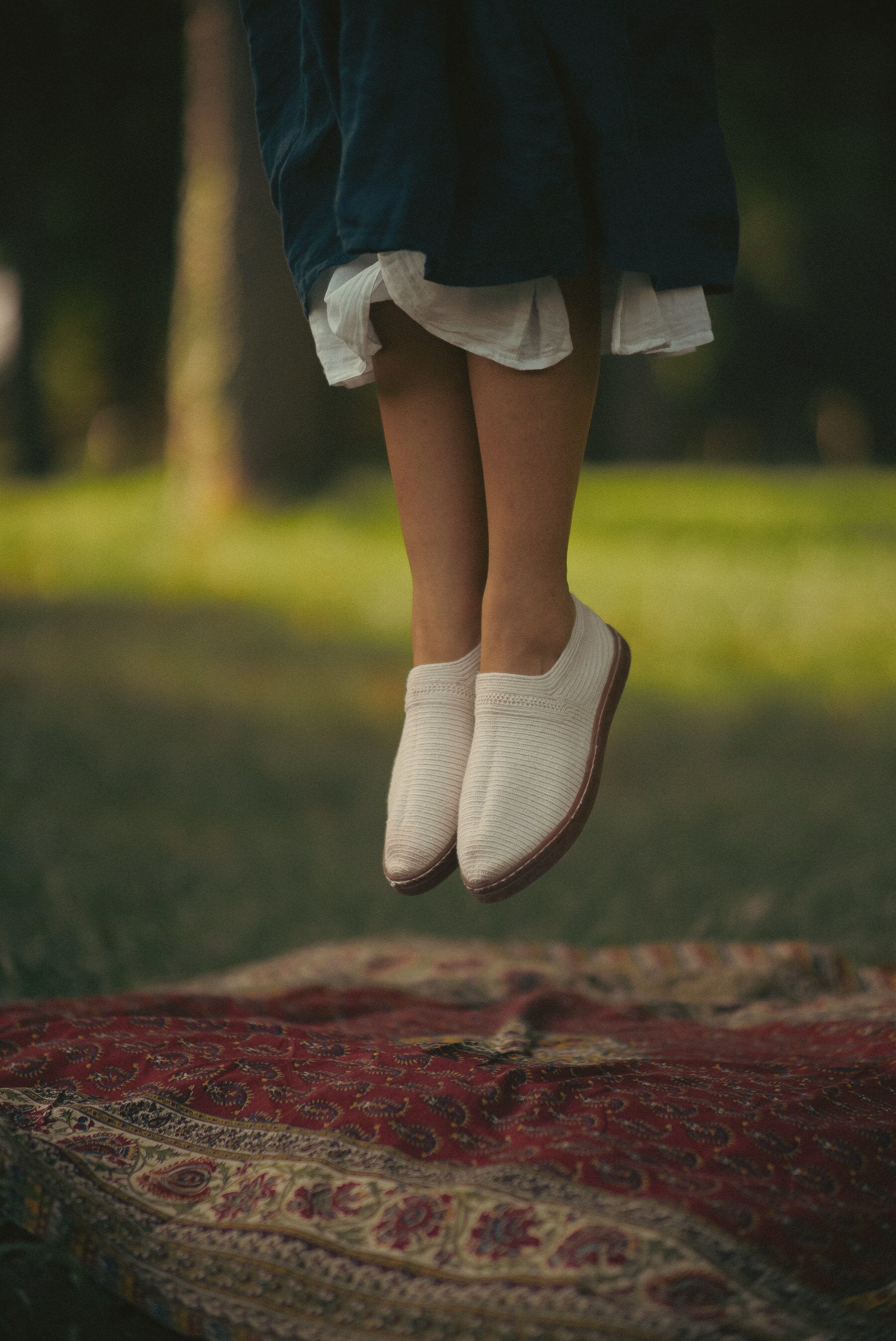
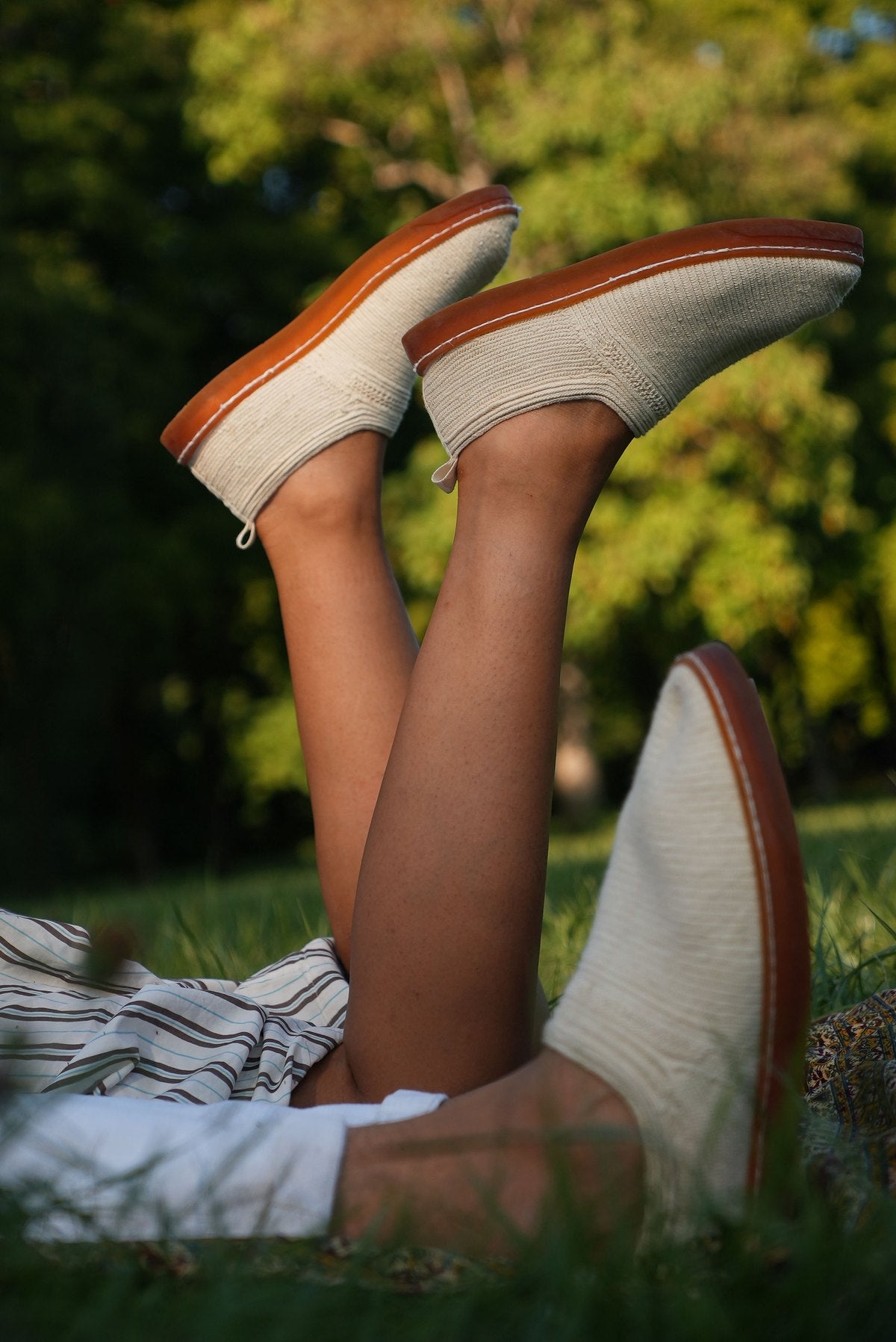
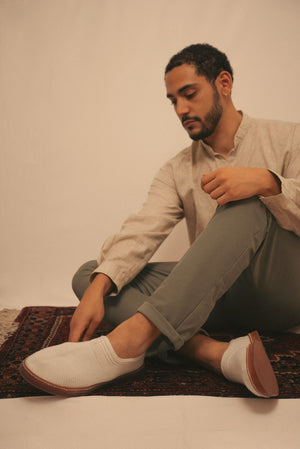
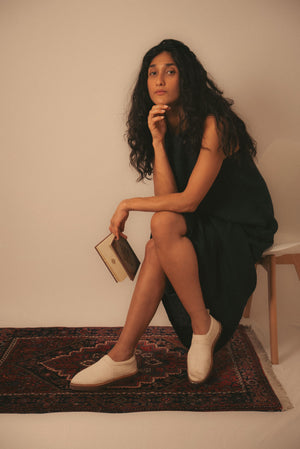
The Pâpouche worn
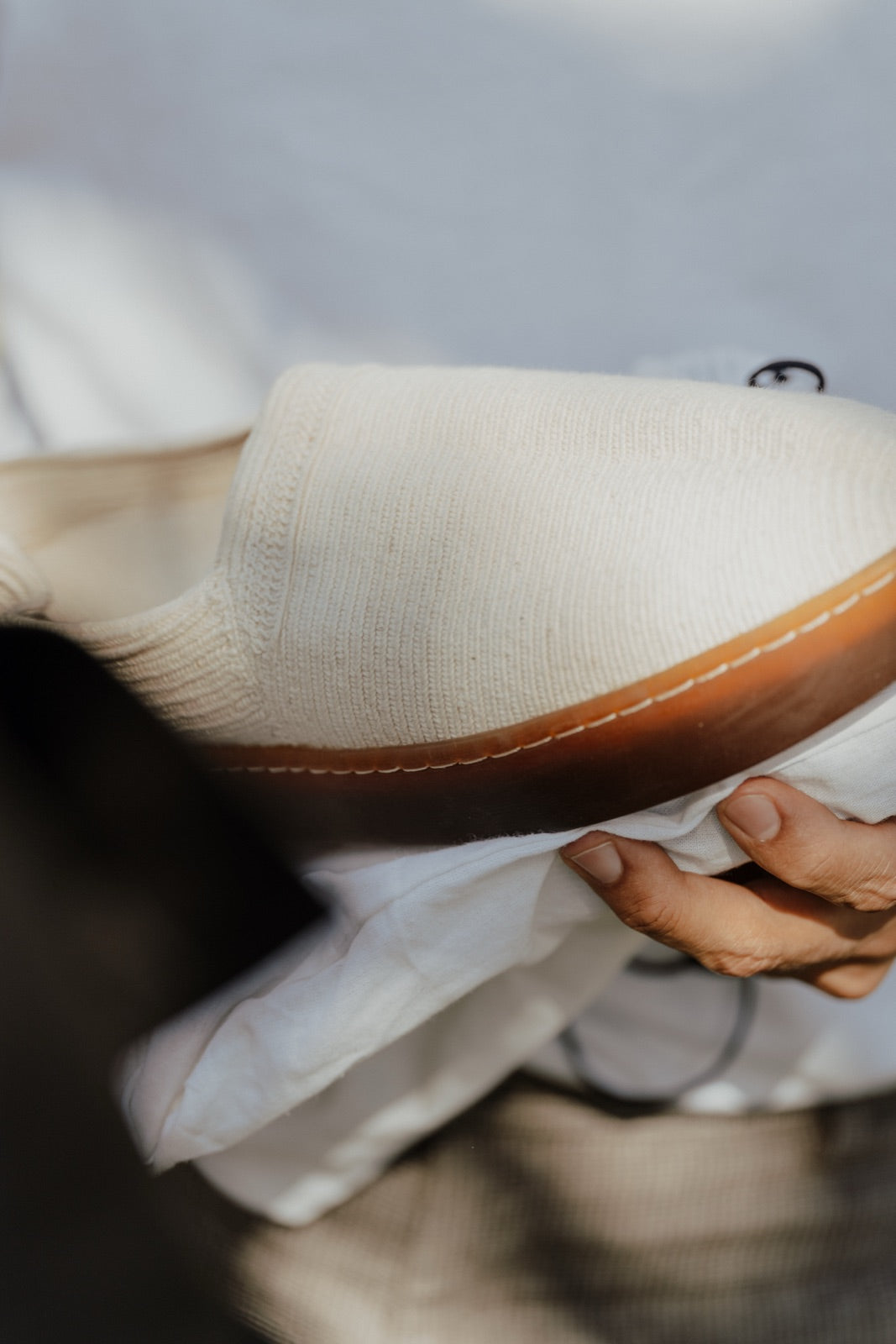
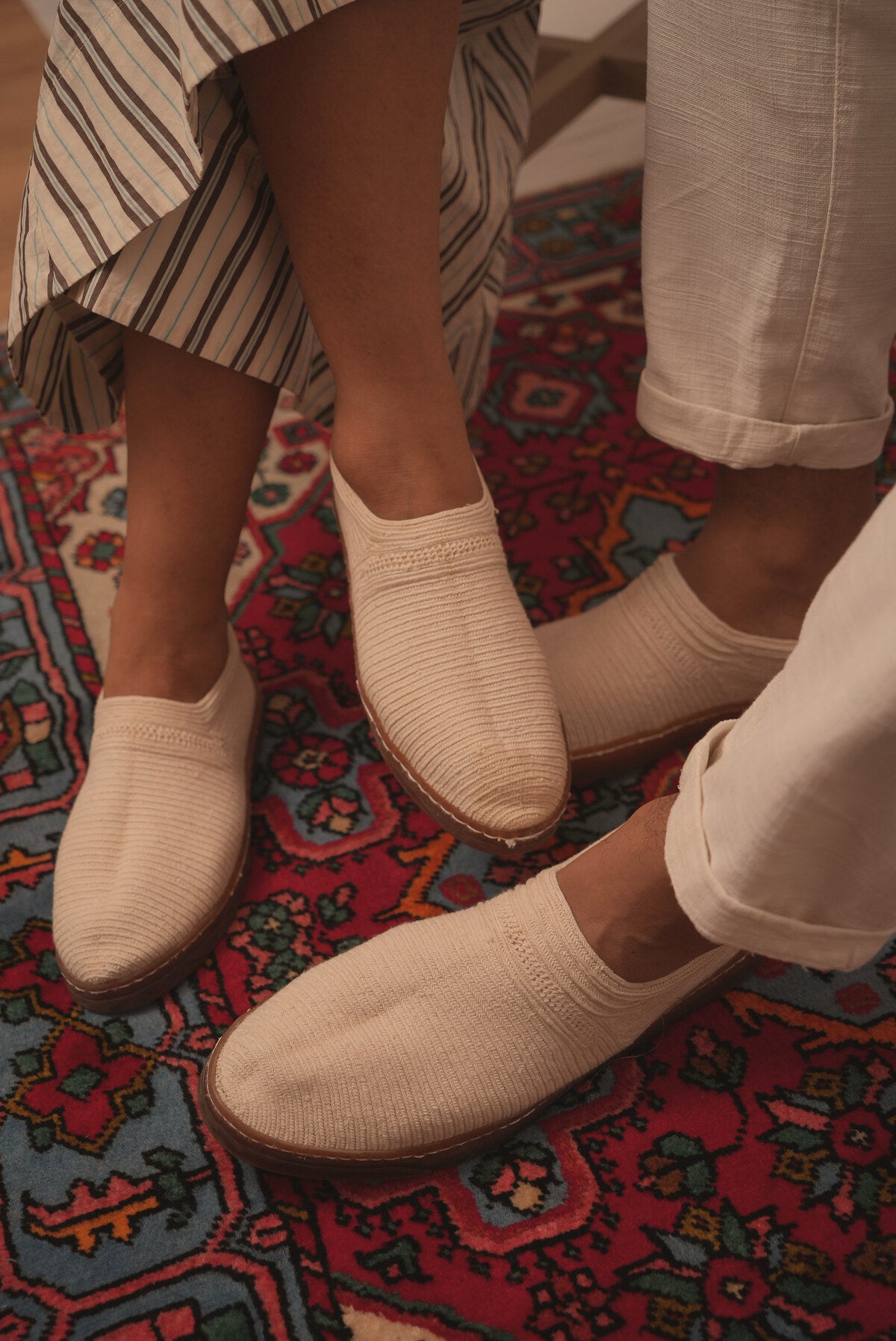
The Pâpouche, detail of the stitch
The Pâpouche, another view
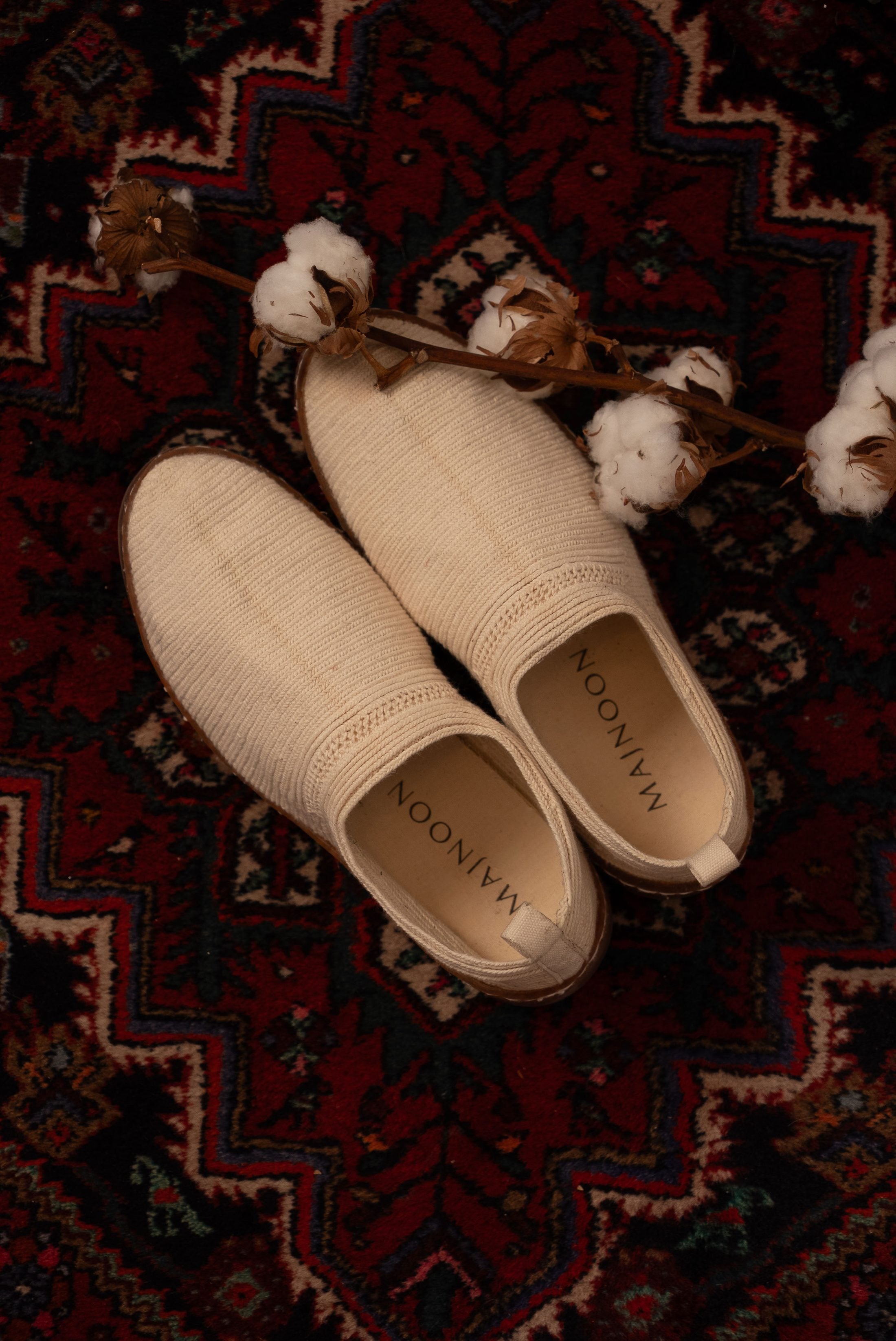
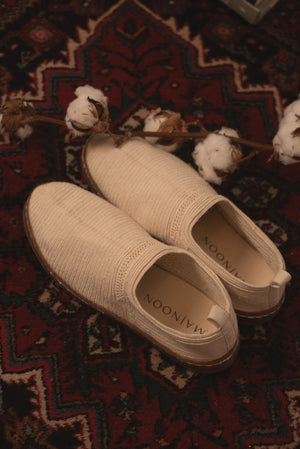
MAJNOON pâpouches seen from above on a Persian rug, surrounded by cotton flowers

Home / The collection / The Pâpouche

White Edition — First series

The Pâpouche

Worn today, as it has been for centuries.

€250,00

Heir to the giveh of Arak, the Pâpouche unites an ancestral gesture with a contemporary silhouette. Its cotton upper, crocheted stitch after stitch by the last artisans of the craft, moulds to the foot and takes on a patina with wear; its sole of hevea milk, refined in France, brings a silent suppleness. Some ten days of crochet go into every pair.

  • Upper — 100% cotton, hand-crocheted in Arak, Iran
  • Sole — LACTAE HEVEA®, natural hevea milk, Made in France
  • Insole — LACTAE HEVEA® and cotton (France and Portugal)
  • Assembly — family-run workshop, Portugal
  • Edition — first series, limited production

The Pâpouche runs large — take one size down from your usual size.
Unisex, from EU 37 to 45.

Every pair ordered keeps the gesture alive — and the women who still carry it.

Secure payment VisaMastercardAmexPayPalApple Pay
Tracked delivery — worldwide 14-day returns Handmade — around ten days Full traceability
Shipping & returns

Tracked delivery worldwide: France €10, European Union €20, rest of the world €35. Dispatched within 2 to 4 working days; allow 2 to 7 days depending on the destination. Outside the European Union, any customs duties are payable by the recipient.

You have 14 days to change your mind. Return shipping is at the customer's expense.

Size guide

The Pâpouche runs large. Order one size down from your usual size: the cut is generous, and crocheted cotton relaxes slightly over the first few wears. If in doubt, measure your foot: the size guide gives the exact conversions, foot length and size to order.

Care

Hand wash in cold water with a mild and strictly colourless soap — a coloured soap could tint the natural upper. Air dry in the shade. Cotton takes on a patina and softens over time — that is the natural life of the material.

Making & traceability

Upper hand-crocheted in Arak, Iran — hevea milk sole refined in France — assembled in a family-run workshop in Portugal — designed in Paris.

We document every step, with no middlemen and nothing left in shadow.

Rarity

Fewer than twenty artisans in the world still master this crochet. Every series is limited by the hand that makes it — and will never be mass-produced.

Authenticity

The upper of the giveh has remained unchanged for centuries. We have altered nothing of the gesture: only the sole and the silhouette.

Transparency

Arak, France, Portugal: three places, three crafts, and full traceability that we document at every step.

Lookbook

A couple in studio, natural pâpouches on a Persian rug
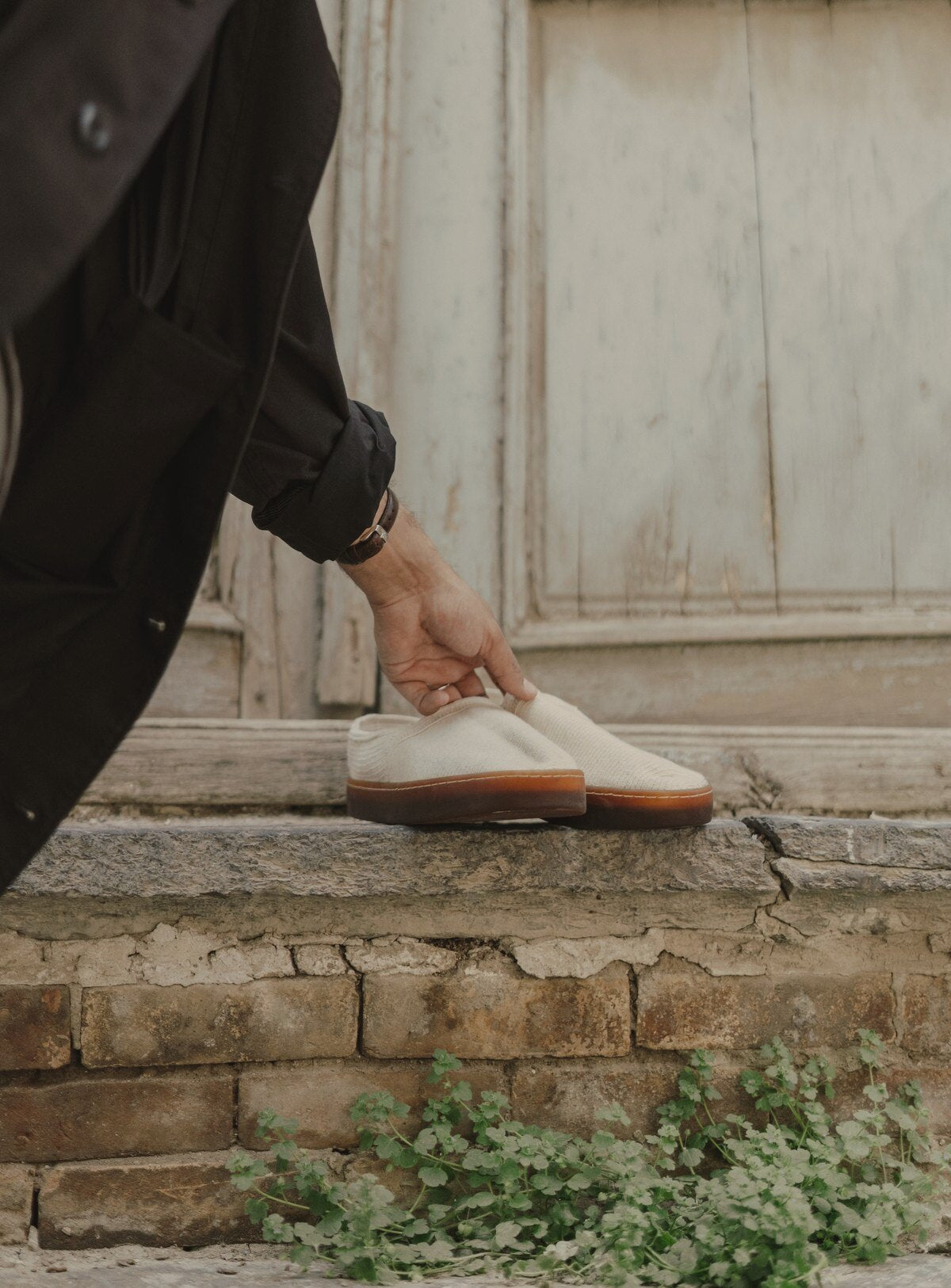
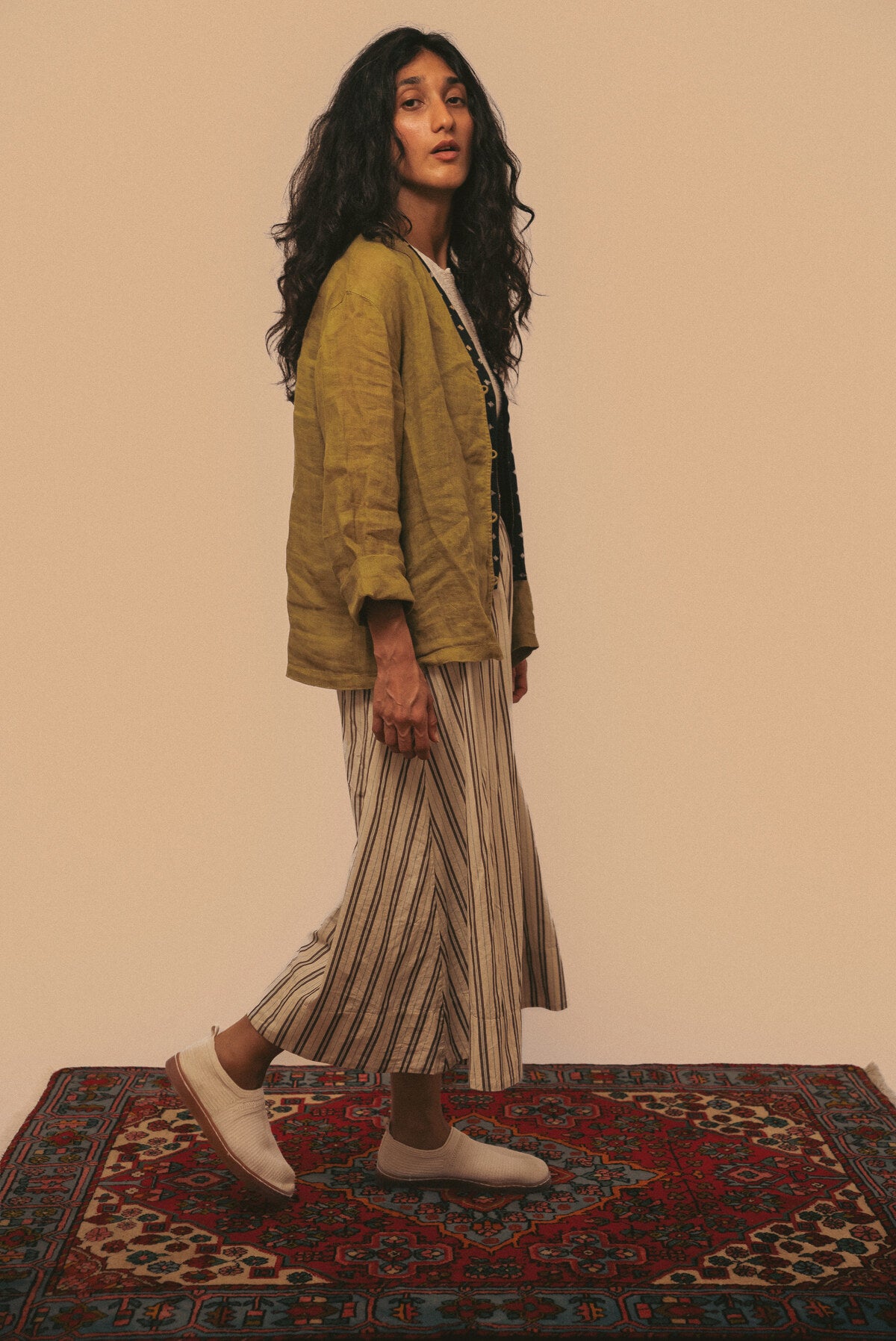
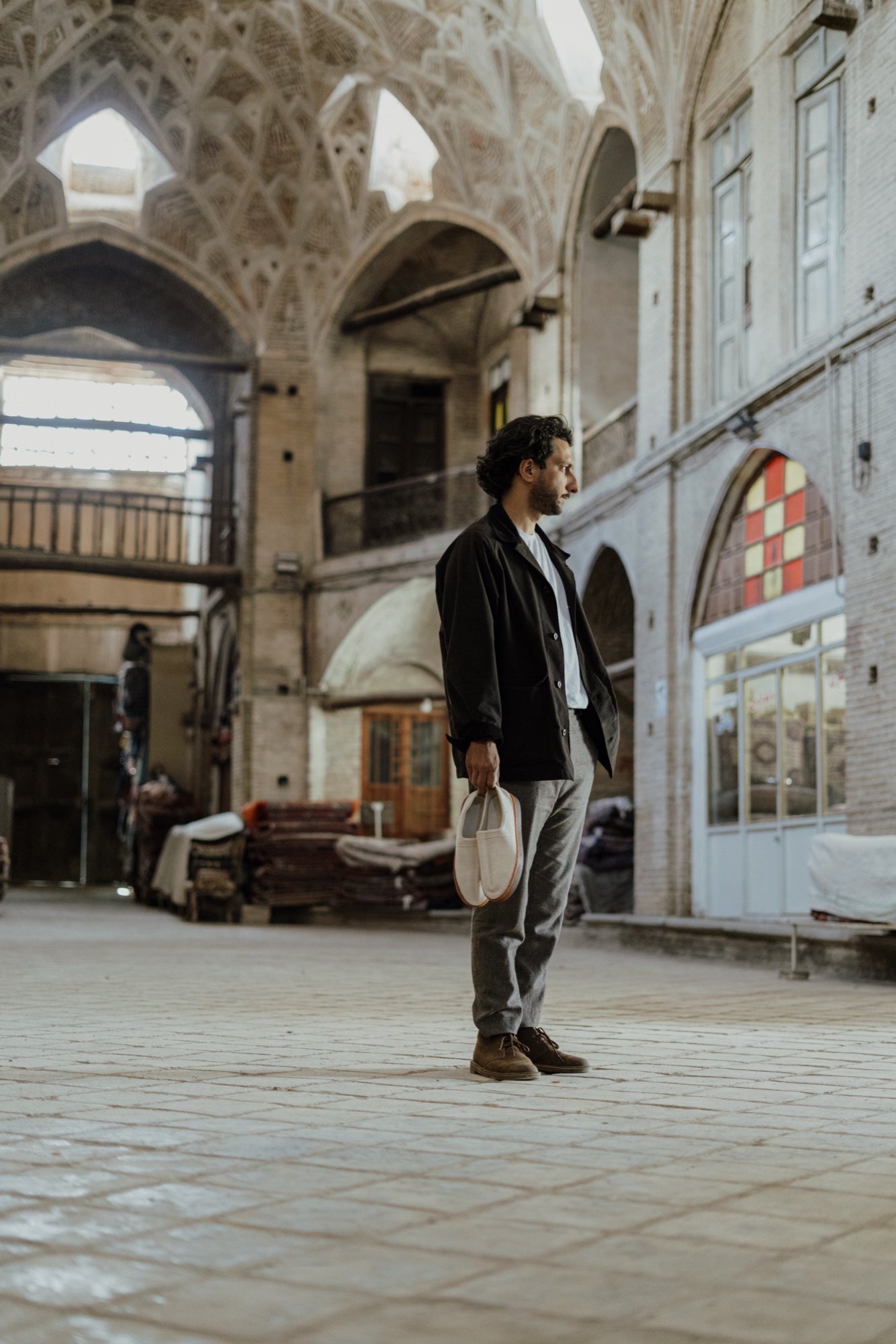
A walking figure, olive jacket, white pâpouches
Two pairs of pâpouches worn on a Persian rug
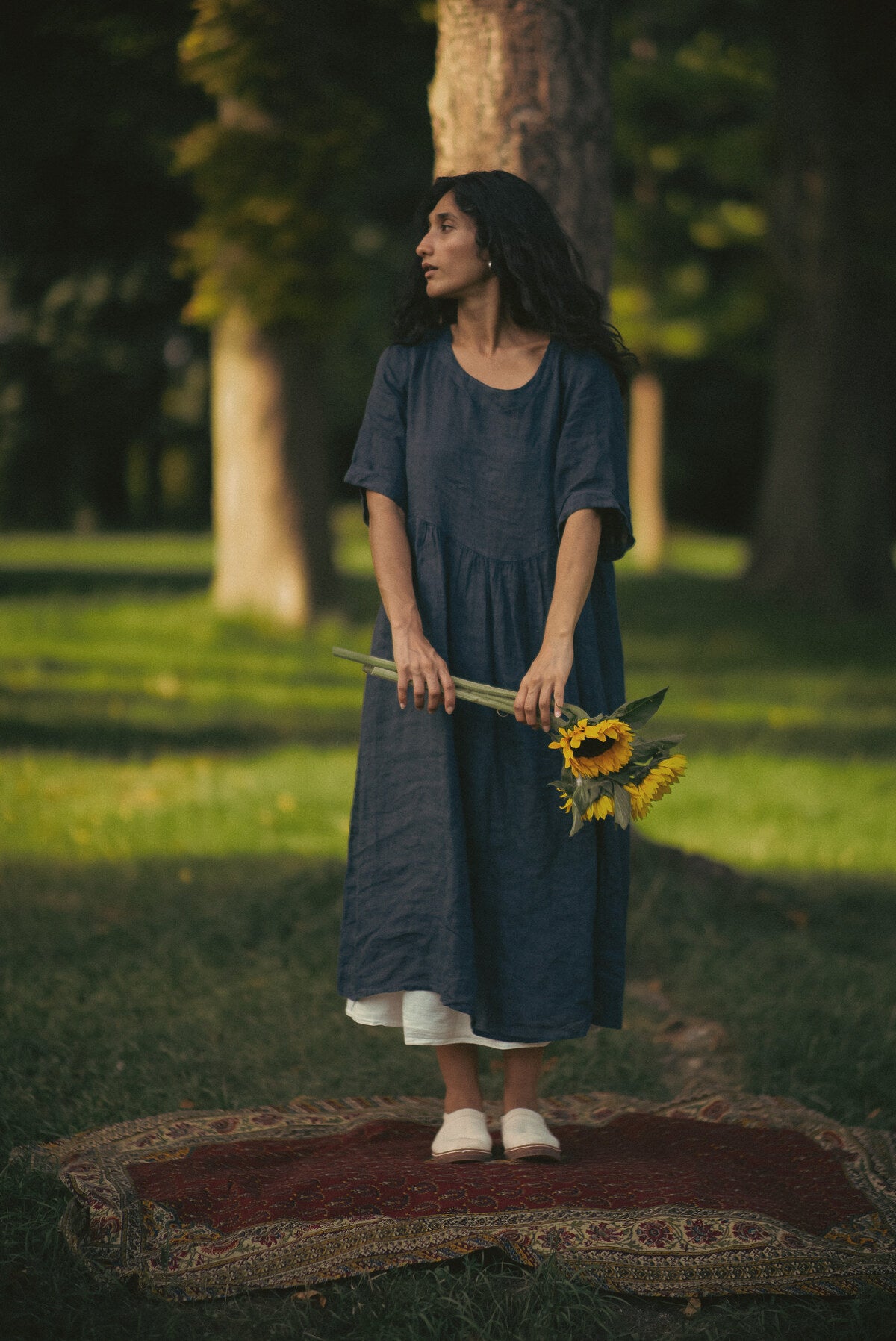
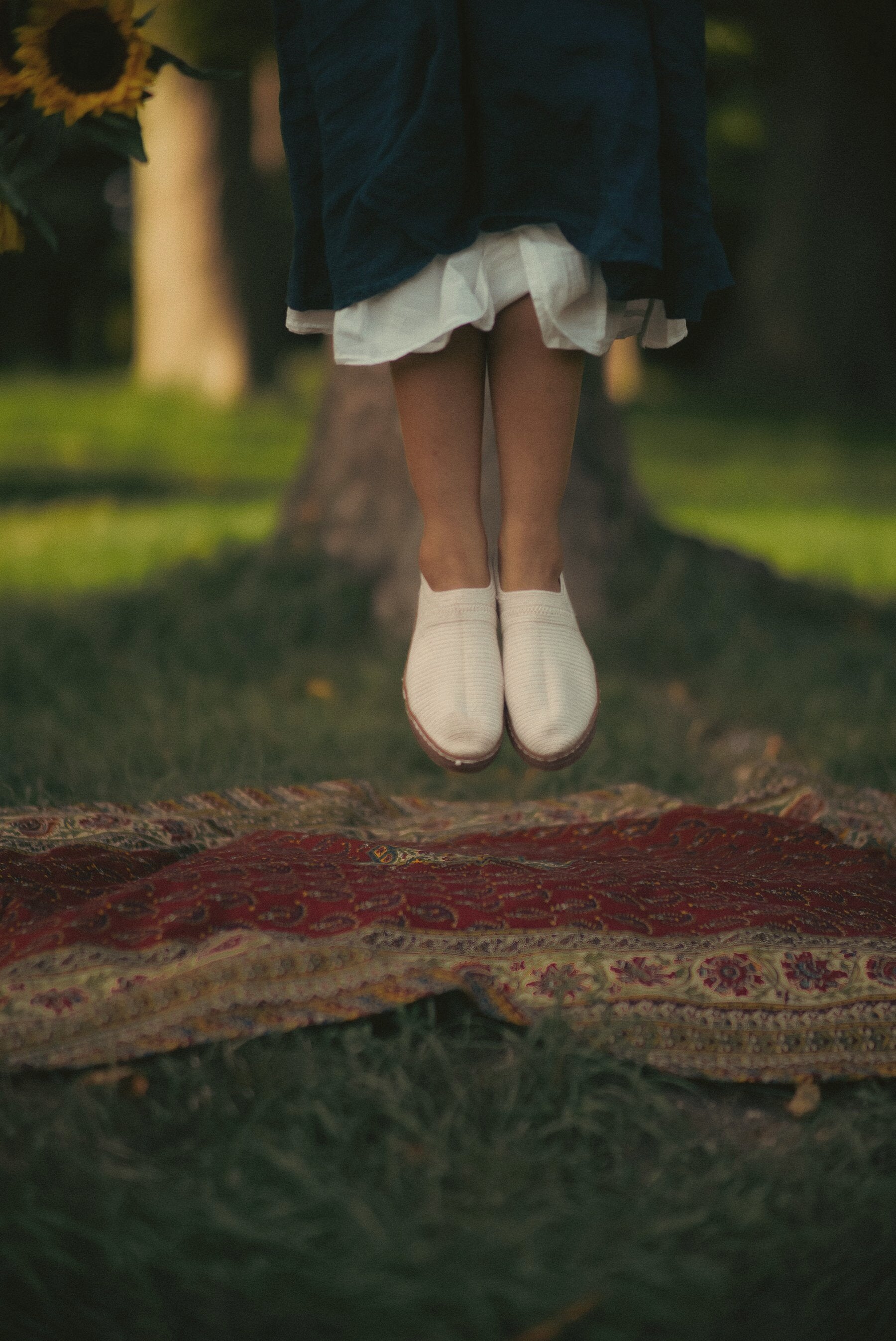
A woman with sunflowers in a park, pâpouches on her feet
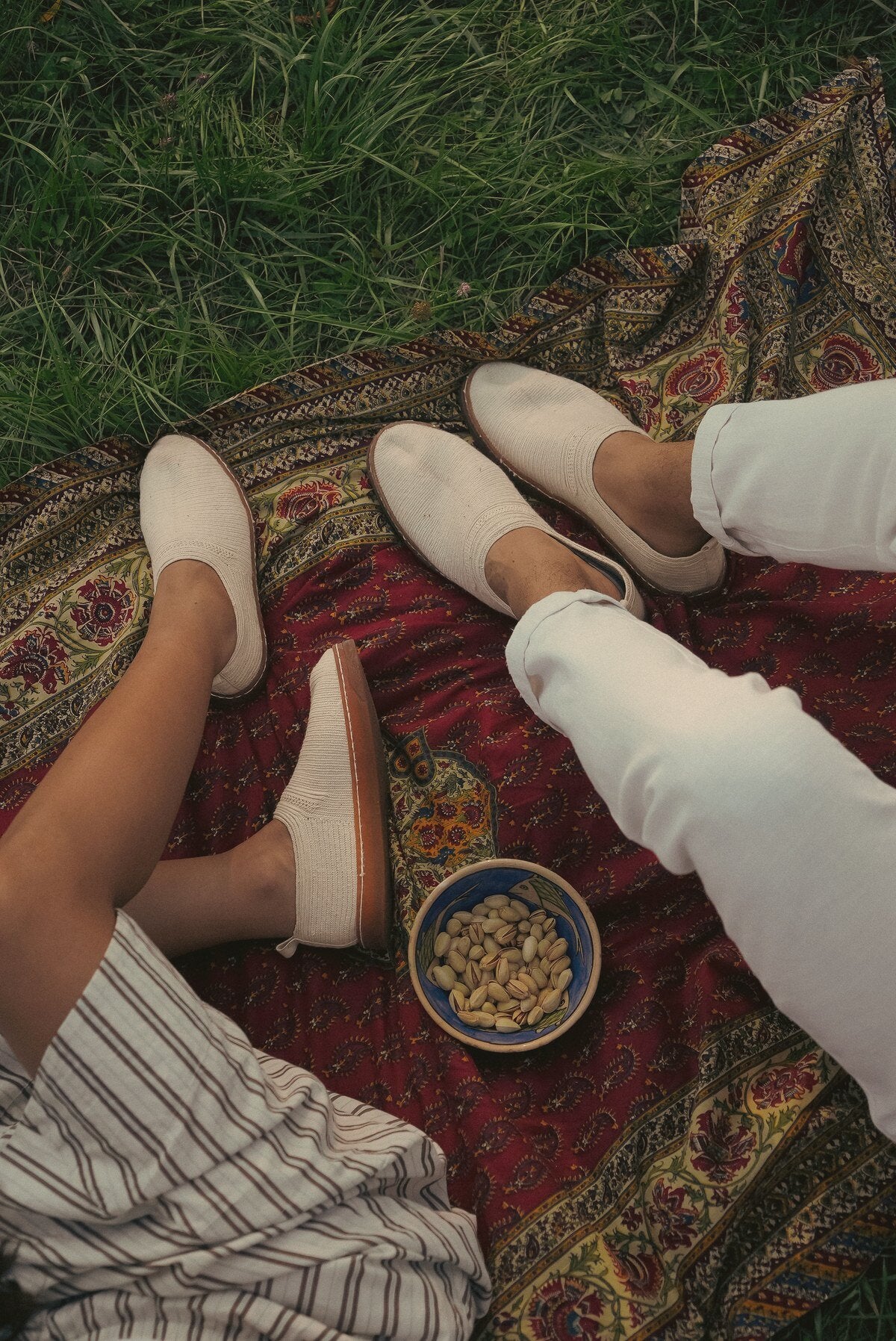
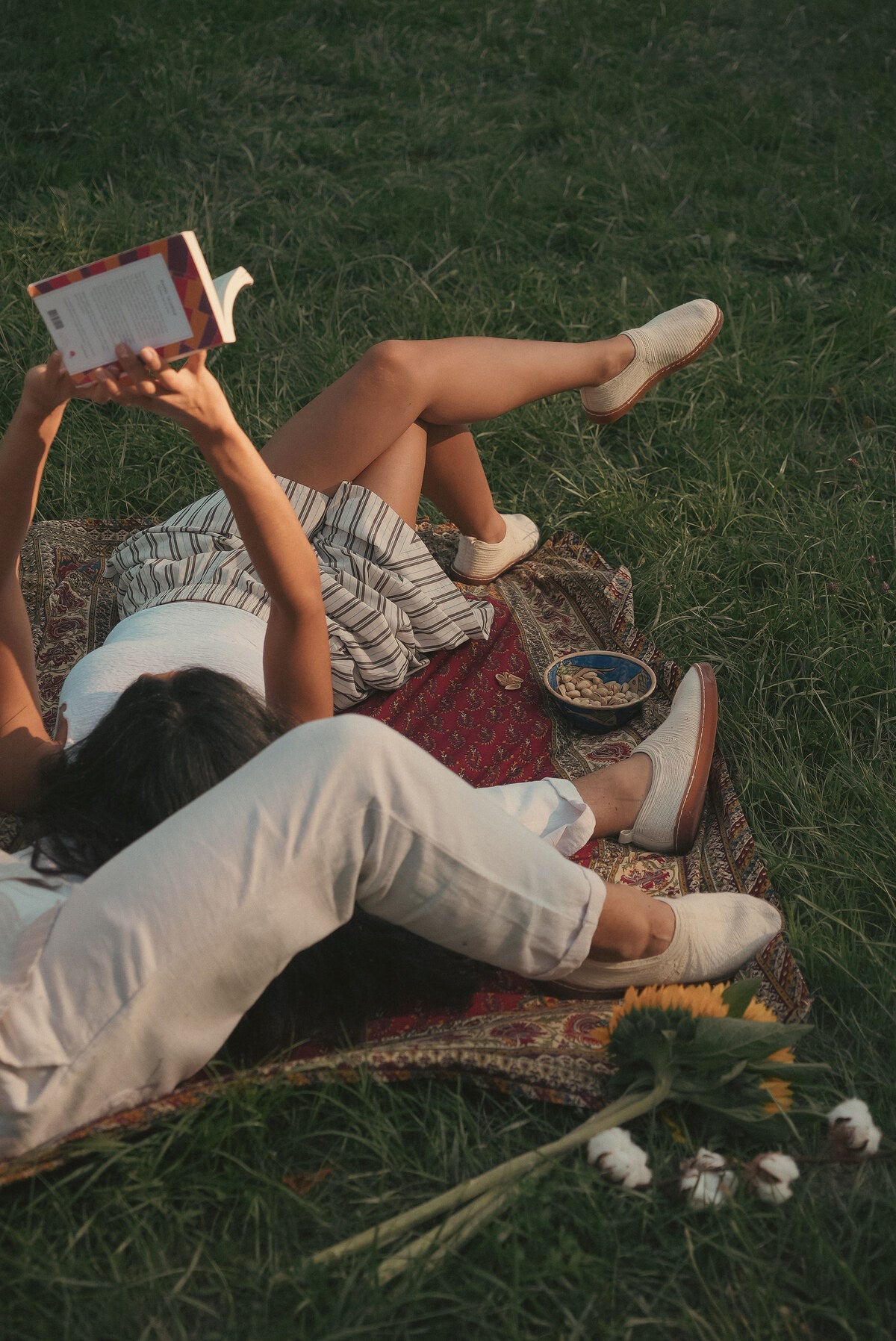
A picnic on a Persian rug, pâpouches and pistachios
Reading stretched out on a rug in the grass, pâpouches on the feet
لیلی و مجنون

Leili & Majnoon

Before Romeo and Juliet, there were Leili and Majnoon. Born in the deserts of Arabia in the 7the century around the poet Qays — so taken with Leili that he lost his own name and kept only that of Majnoon, “the madman” — the tale first passed by word of mouth, before Nezami turned it, in the 12the century, into the great Persian poem the East still recites.

Persian miniature: Leili and Majnoon as children, at school
“Leili and Majnoon at school” — a folio from a Khamsa by Nezami, Herat, 1431 (Timurid workshop).
The Metropolitan Museum of Art (public domain).

In Nezami's hands, this impossible love becomes far more than a tragedy: it becomes a path. Parted from his beloved, Majnoon makes her the mirror of an absolute — the figure of a soul consumed by what exceeds it. Over the centuries this mystical reading prevailed: Majnoon is not merely the mad lover, he is the perfect lover, the one for whom loving and being are no longer two things.

From language to language, the tale spread across the Arab and Muslim world and far beyond — from the Maghreb to India, from Africa to Central Asia — rewritten by the poets of each land. Few stories have been so widely shared. It is this name, and this idea of absolute love, that the house has chosen to carry.

MAJNOON pâpouches, evoking the tale of Leili & Majnoon
در ره منزل لیلی که خطرهاست در آن / شرط اول قدم آن است که مجنون باشی

“On the road that leads to Leili, where perils abound, the first condition, from the very first step, is to be Majnoon.”

Hafez · Divan, ghazal 458
A hand sets a pair of Pâpouches down on Persian rugs, in chiaroscuro
Arak · central plateau · Qajar dynasty

The story of the pâpouche

تاریخِ پاپوش

Pâpouche, from the Persian “pâ” (foot) and “pouche” (to cover), is the name for traditional Persian footwear.

An artisan and several pâpouche models with different soles, in his shop
Three pâpouches among many: the kelâsh (Kurdistan), the giveh — shown here with two soles — and the charoq (Zanjan).

The ancestor of the babouche

Travelling west, the word spread through the Arab world as far as the Maghreb.
Arabic having no “p” sound, pâpuš became babouche, which French in turn adopted.

Iran has a whole family of traditional pâpouches, each shaped by its region — its own form, its own material, its own gesture. The one we have chosen is called “giveh”, and comes from the city of Arak, on the Iranian central plateau — at least since the Qajar dynasty, in the late 18the century.

The hero Giv crossing the Oxus, a Shâhnâmé miniature
The hero Giv — ShâhnâméThe Met, public domain.

A name from the Shâhnâmé of Ferdowsi.

Legend ties the giveh to the hero Giv, horseman of the great Persian epic — a lineage never proven, but one that memory is fond of keeping.

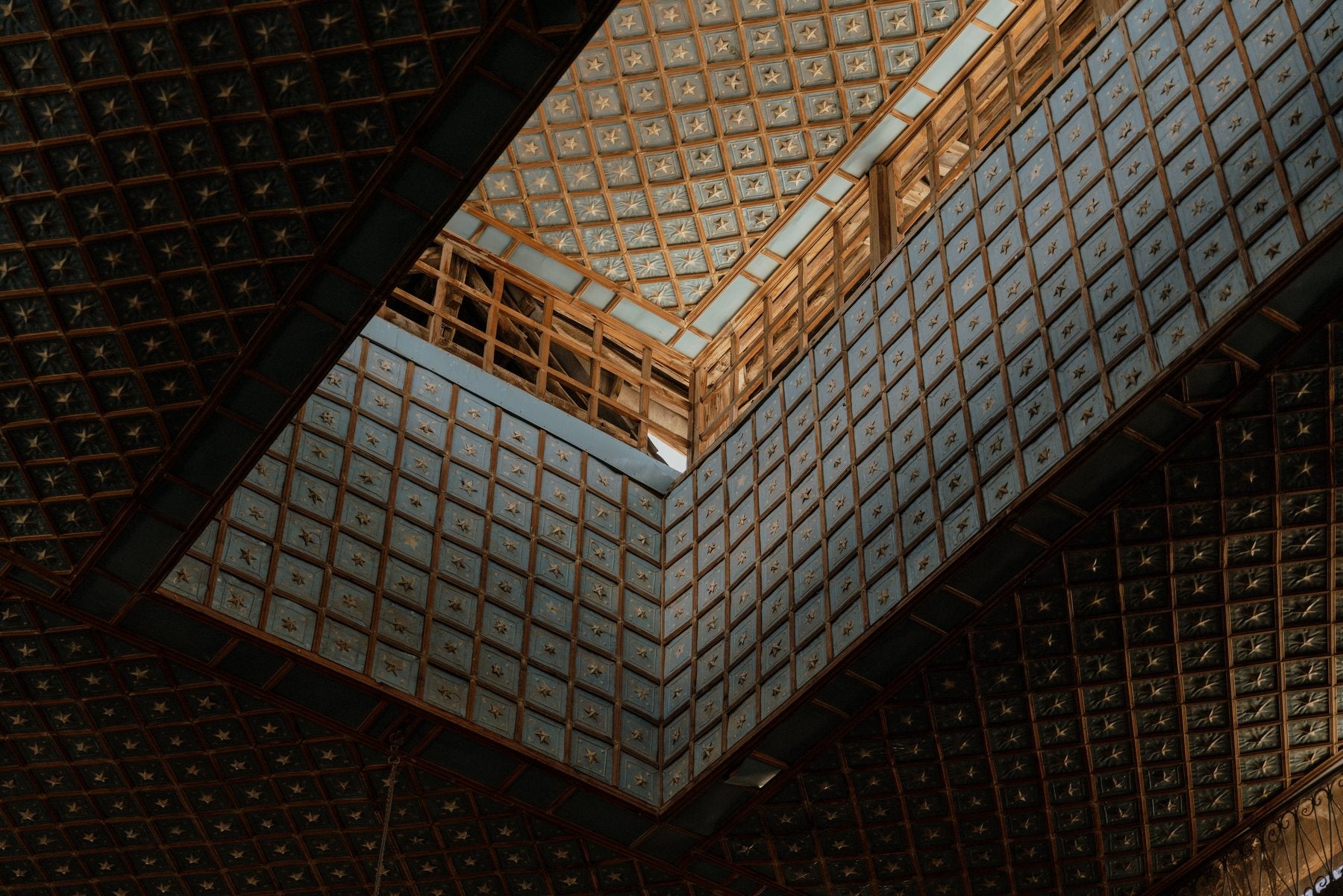
Light well of a Persian caravanserai

“Beyond its trifling fate, the shoe is able to lead the mind all the way to the history of peoples and civilisations.”

Jean-Paul Roux
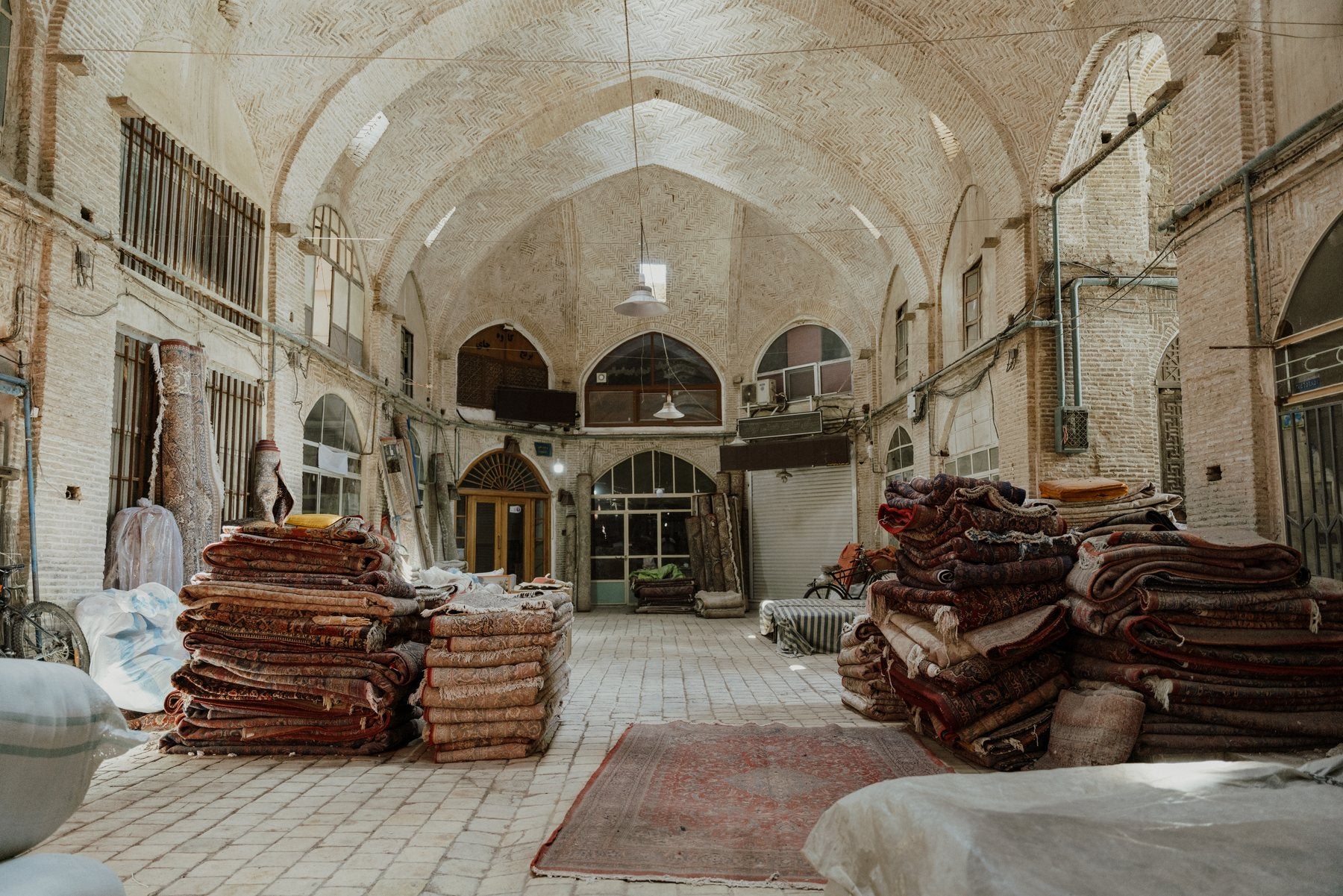
Stacks of Persian rugs in the Arak bazaar
The rugs of the Arak bazaar
Skeins of dyed thread hanging
The threads, dyed and hung
Brick domes of the bazaar, pierced with light wells
Noorgir — light catcher
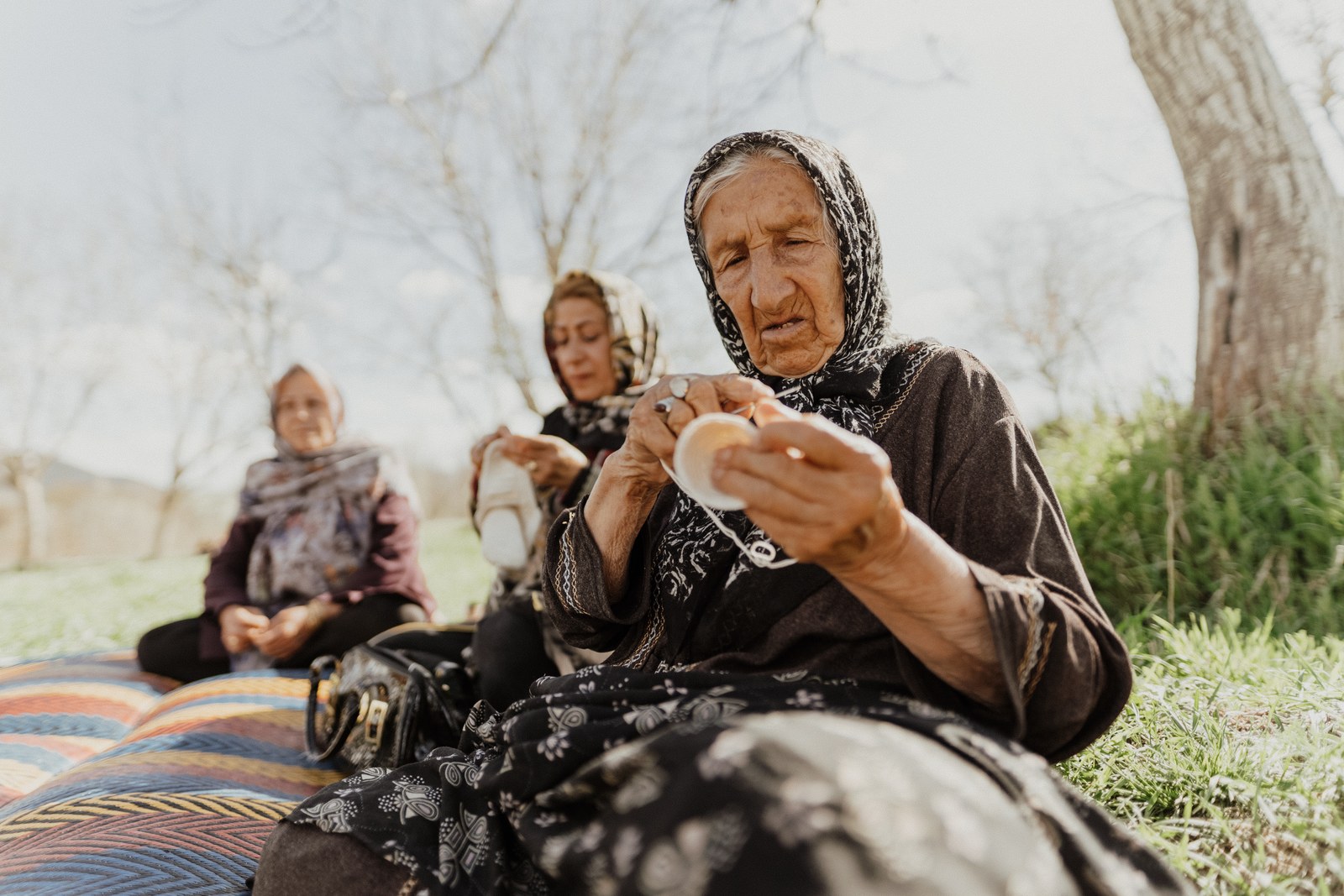
An elder artisan crocheting a pâpouche, seated in the grass

A mother's heritage

میراثِ مادری

This craft is taught in no school. It passes from mother to daughter, as it has for centuries, in the houses and courtyards of Arak.

A mother and daughter crocheting together
Learning

From mother to daughter

Learning takes place with theostad, the master artisan. From generation to generation, from mother to daughter — and for centuries, in this same region.

میراث Heritage
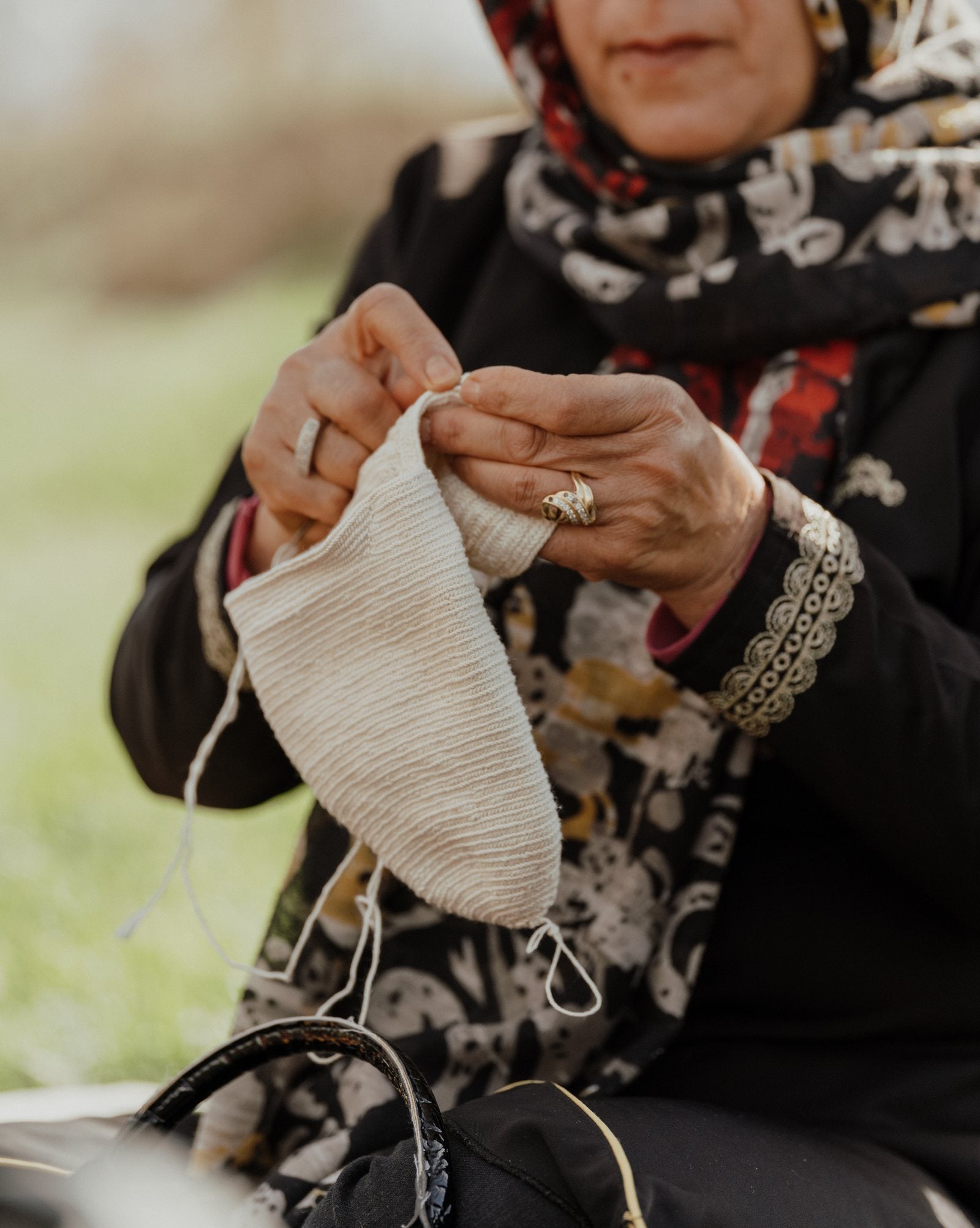
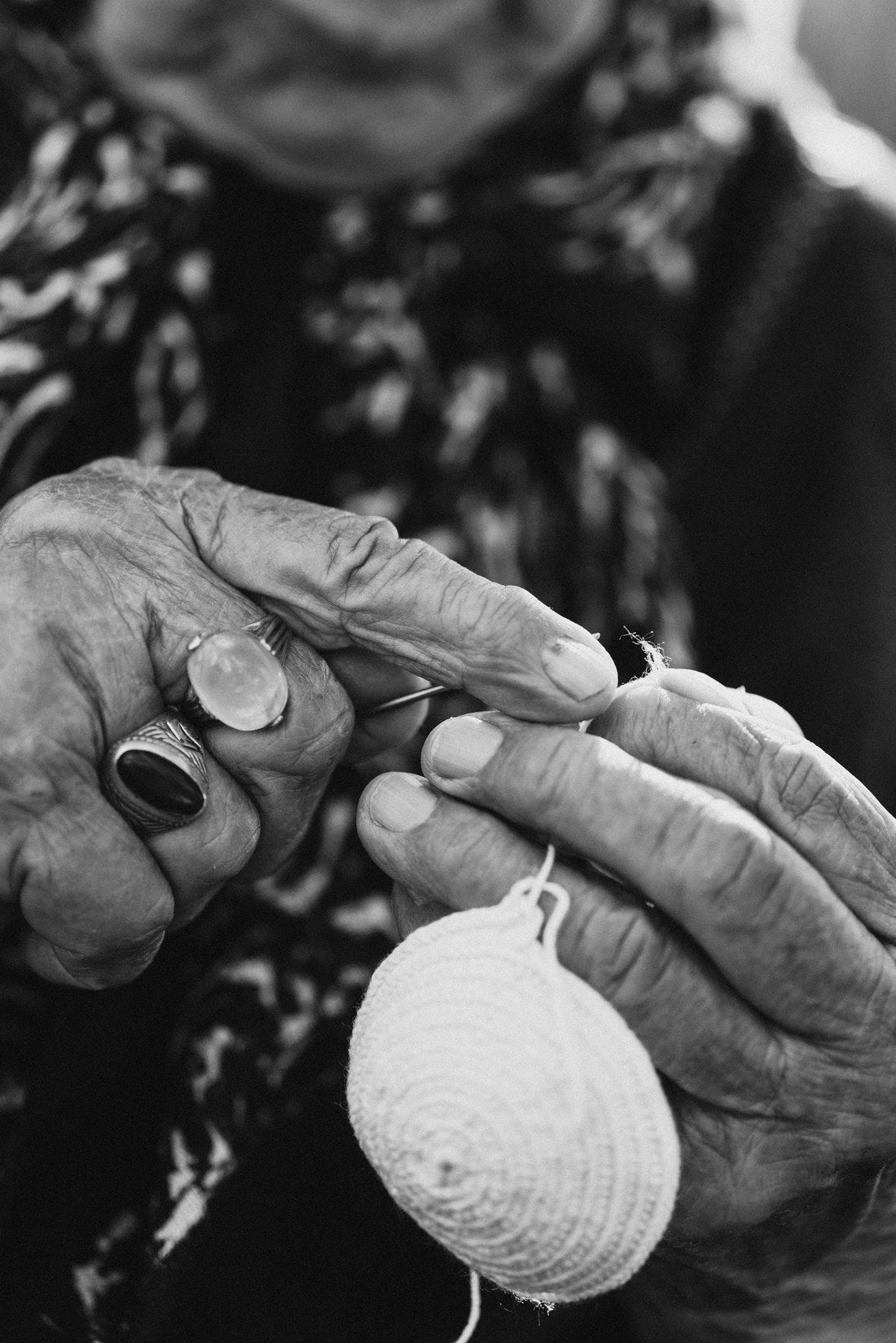
Close-up of hands crocheting the upper of a pâpouche
Time

Thread after thread

Some ten days go into a single pair. Yet it is no race against the clock: crochet is not a full-time job but a daily gesture, taken up again in whatever hours are free.

صبر Patience
An artisan at work, portrait
Independence

Independent women

Crochet allows them to earn their own income and be financially independent. Yet they are growing rarer: the youngest have gradually left the villages for the cities.

هم‌بستگی Sisterhood
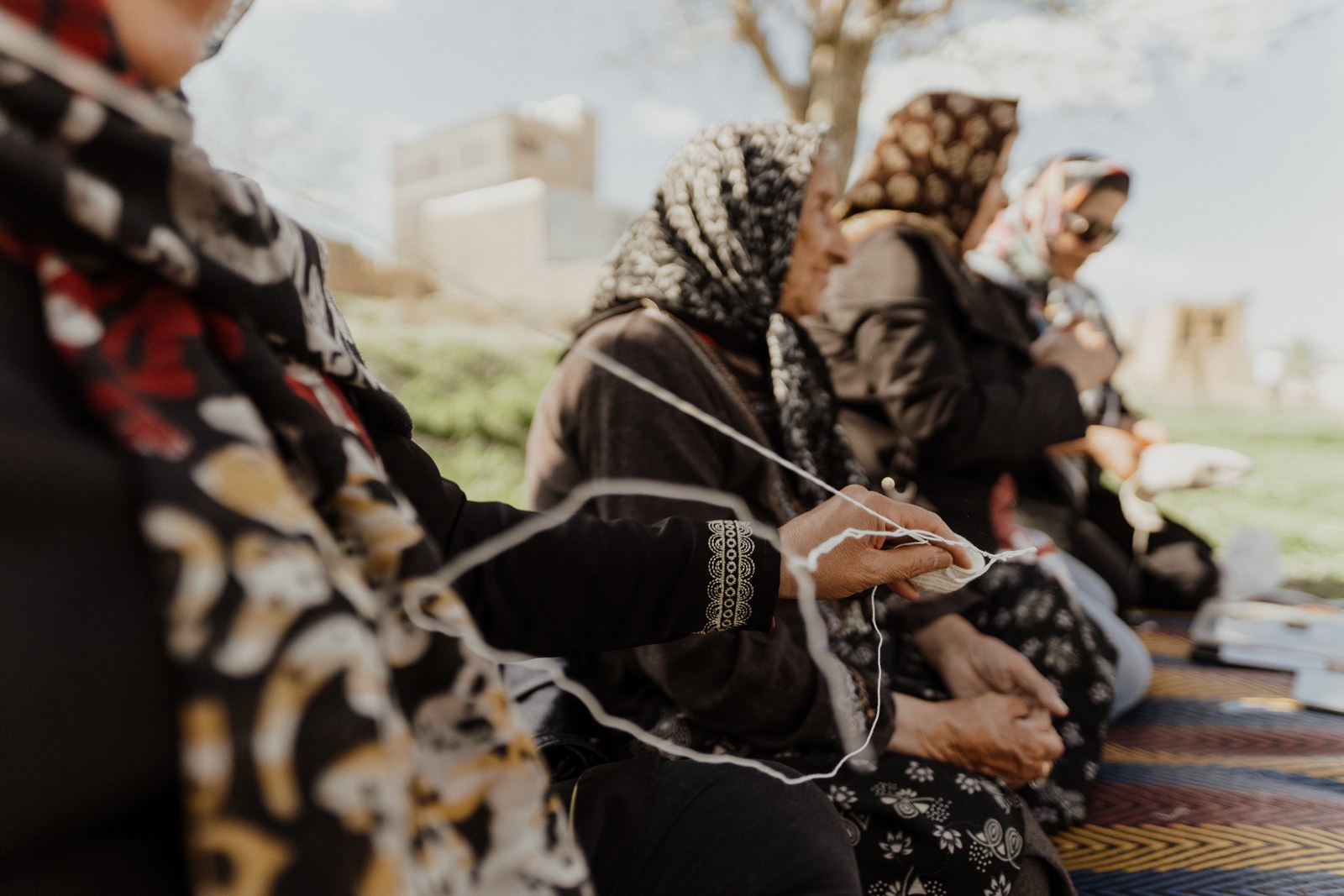
Artisans crocheting together out in the open
Together

A way of living

Sitting together out in the open on sunny afternoons, around tea served on a cloth, they crochet while talking, reciting poems, singing. The giveh takes shape little by little, loop after loop.

In their own voice

For the space of an afternoon, the artisans tell of their craft and their lives. Turn the sound up.

Crochet

قلاب‌بافی

A simple hook, a cotton thread, and thousands of stitches drawn tight one by one. The upper is born of a single continuous gesture, with no seam and no assembly, at a density no machine can reproduce.

Close to ten days of crochet in every pair.

Because it is made by hand, no pair is quite like another: every artisan has her own signature — her hand, her tension on the thread.

Every Pâpouche becomes a one-of-a-kind piece.

Detail of the hook and the cotton thread
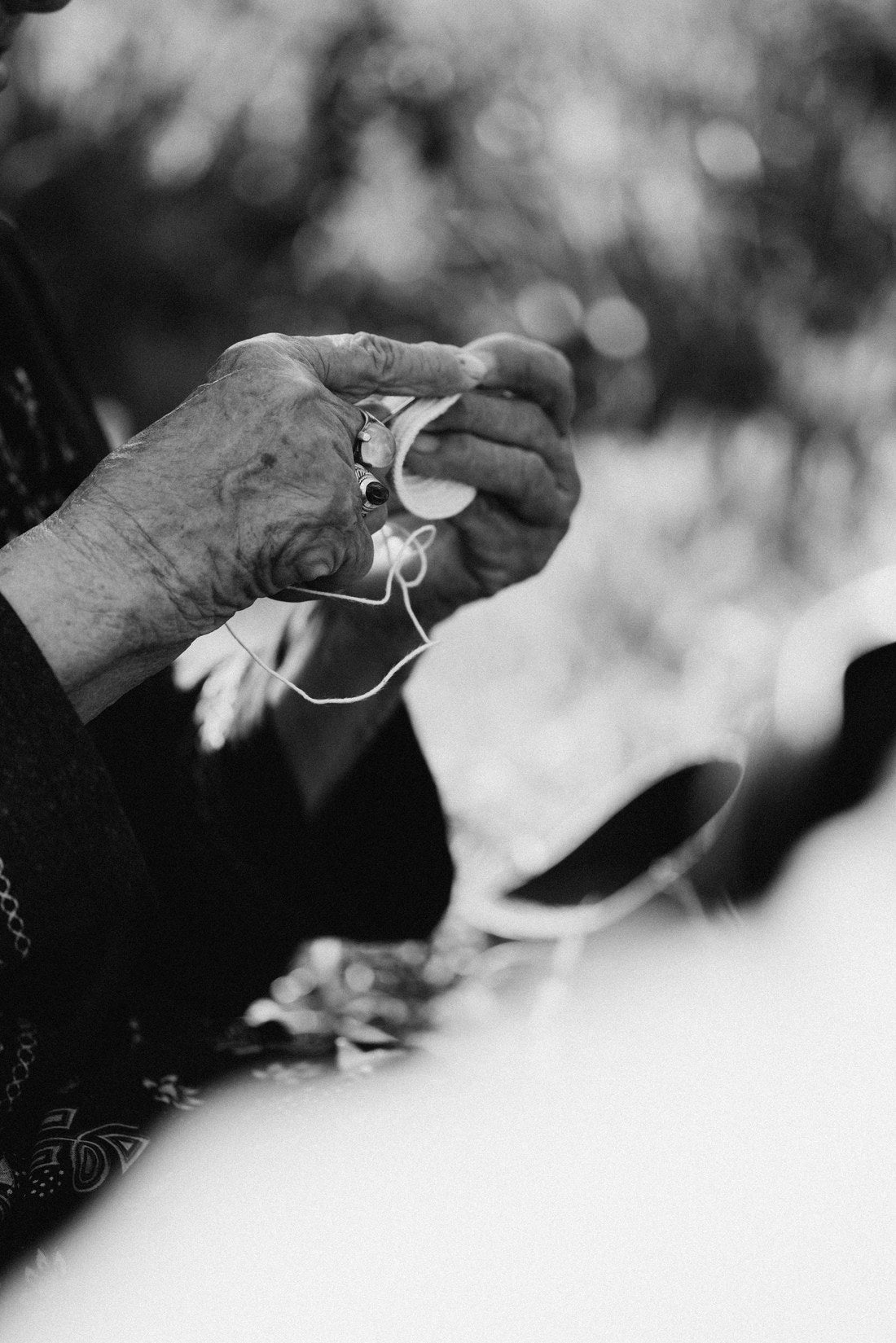
An artisan's hands at work
The cotton upper being crocheted
An elder's hands crocheting the upper of a pâpouche, in chiaroscuro

A heritage at risk

میراثی در خطر

Today only some twenty women still master this technique.

Without transmission, this gesture will disappear with them.

An old pâpouche, worn by time
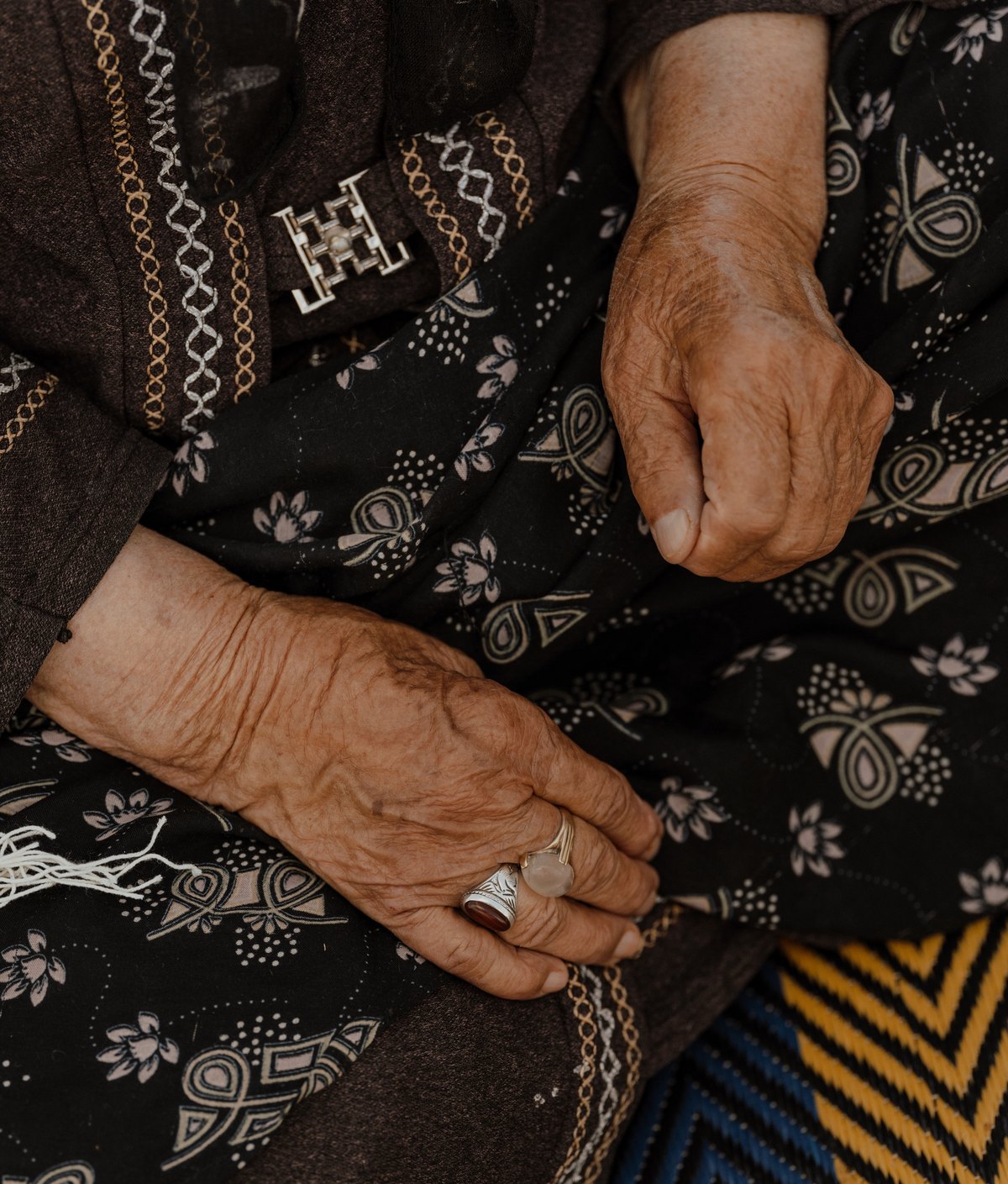
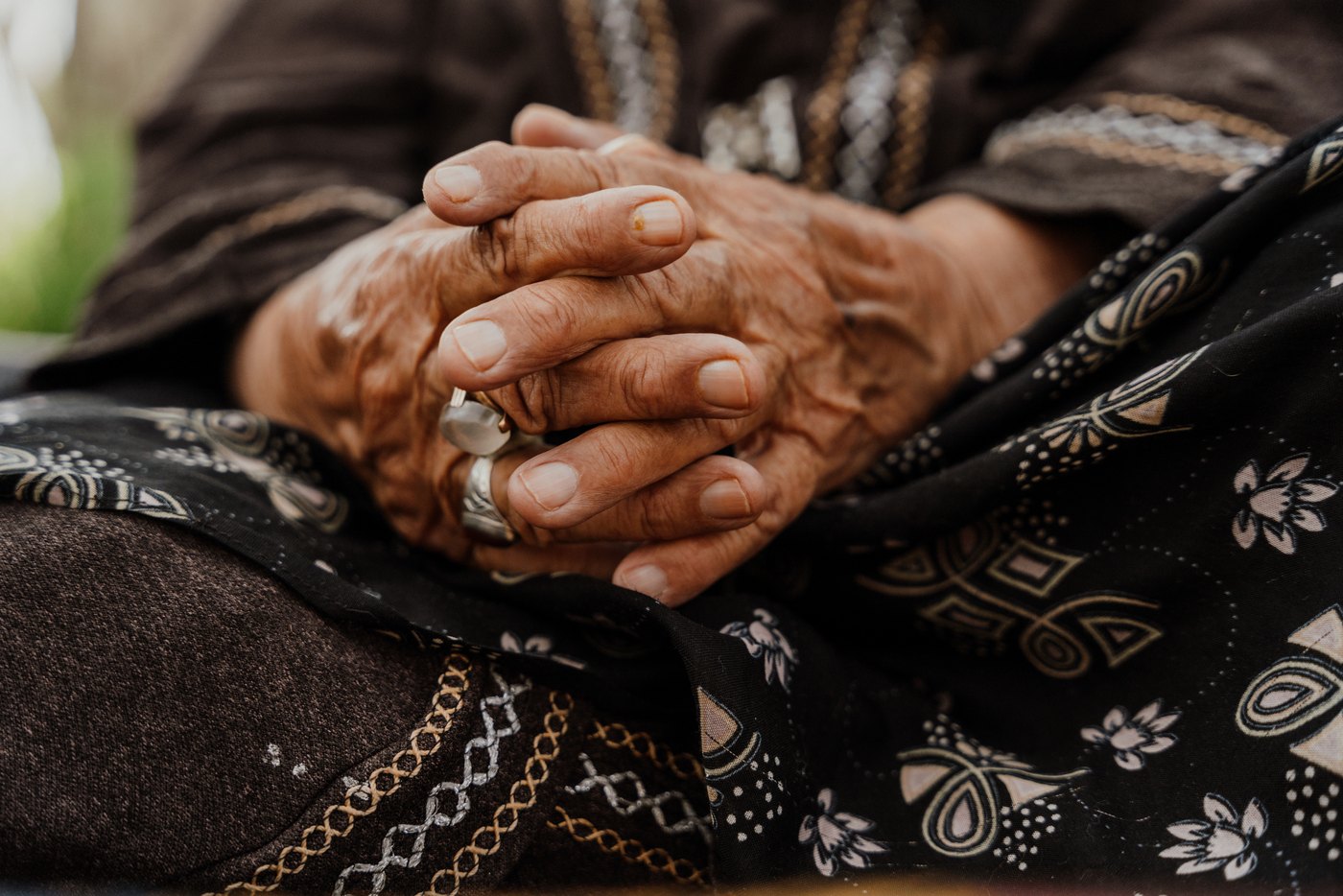
Aged hands and cotton thread
Detail of a hand-crocheted giveh
Why the decline

Having remained almost unchanged, the pâpouche came to look old-fashioned in the cities, where trainers and modern shoes are now preferred.

Industrial production did the rest: cheap imitations — cotton upper swapped for synthetic, leather sole for imported plastic — flooded the market. The authentic giveh is now almost impossible to find in Tehran; you have to reach the remote villages to find it still. To this is added the economic and political crisis the country is going through, which weakens this craft further.

An elder's hands at rest, embroidered by time

By giving the giveh a second life, MAJNOON wants to make that transmission desirable again — and possible.

A passenger in love

I grew up with a country I knew only in fragments — scraps of stories, photographs, family nostalgia. To know it truly, I had to see past the clichés that filled my childhood gaze, the same received ideas that so often decorate the imagination when one tries to picture the Persia of old.

That late encounter was sumptuous, spellbinding. It had everything to feed the hunger of someone who had grown up uprooted. But wonder is the passenger's pleasure, and I no longer wanted merely to pass through: I wanted to take root. That is when I found what was missing — the need for a bond that holds. And it is precisely that absence which led me to Majnoon.

Majnoon is the name given to a legendary lover who became “the madman”, the one the Djinns had touched. Mad with love, mad for Leili. His passion, painful and without measure, condemns him to wandering: he takes to the desert, where his solitary flame becomes his only dwelling.

It was in that same desert, in central Iran, in a village called Senejan, that I first met the artisans, and their gesture.

I knew, in that moment, that I had found what I was looking for — not an object, but a way of taking root. A shoe to walk in, made for the traveller; a shoe for Majnoon, for a passenger in love.

Danial MazinaniFounder of MAJNOON
Portrait of Danial Mazinani, founder of Majnoon
Pâpouche prototypes, explorations of form

Design in the service of craft

If this craft is fading, it is partly a question of form: its lack of comfort and an aesthetic left almost untouched ended up making it look dated, particularly in the city. This is where design comes in: sketches and research led to a modern shoe with a supple sole in natural rubber — while the crocheted upper remains rigorously unchanged.

Prototypes

The modern Pâpouche, crocheted upper and contemporary sole
Final model

Rethought in this way, the giveh takes on a form of today — modernised without ever being distorted. We kept the spirit of the off-white model, as tradition would have it: an ancestral, timeless, unisex shoe.

Hevea milk

The LACTAE HEVEA® sole comes from the refining of an entirely natural material: hevea milk, gathered in tropical plantations that are regularly tended and continually renewed.

Harvesting, far from weakening the tree, helps it thrive: by the time one end of the tapped section is reached, the other has finished regenerating, and a new cycle begins. No natural forest is taken; after 25 years the old tree is felled and a new one planted.

Made by an entirely manual, environmentally respectful craft process, within a French company on a human scale, the sole is part of a sustainable approach.

Hevea milk collected in a bowl fixed to the trunk
Hevea milk, gathered straight from the tree.
The hevea milk sole, worn on a rug in the grass
The hevea milk sole, worn.

Production & transparency

Assembly and finishing are entrusted to a family-run workshop in Portugal — a country recognised worldwide for its expertise in footwear and textiles, its skilled workforce, and manufacturing conditions that meet European standards and respect the people who work there.

Its proximity matters just as much: assembling in Europe rather than on the other side of the world lightens the footprint of transport — a choice as ecological as it is ethical.

Like the Silk Roads that once linked East and West, MAJNOON weaves a thread between them: an ancestral technique from Iran, a sole refined in France, assembly in Portugal. A meeting of crafts, against the grain of mass production.

The scale we accept

MAJNOON does not seek to answer urgency with volume. Every pair depends on the time of a hand, not on a production line — we cannot, and do not wish to, produce at scale.

That means limited series, sometimes long lead times, and availability that does not always keep up with demand. It is a deliberate choice: to preserve the gesture rather than dilute it, even if that means staying rare.

Detail of a crocheted pâpouche, held in the hand

The cotton

The artisans have told us that the thread comes from rug offcuts from the region; we have not yet been able to trace and verify that whole chain. Until it is certain, we will not claim it — tracing it in full is part of the work ahead of us.

Cotton thread offcuts and rugs in the Arak bazaar

Transmission

Fewer than twenty women still master this crochet, and the youngest are moving away from it. Our ambition does not stop at selling pâpouches: we want to help this craft be passed on, to support the artisans who teach it, so that it reaches other hands — younger ones — and can endure.

An artisan and her crochet work